| 08:45 – 09:30 |
Registration |
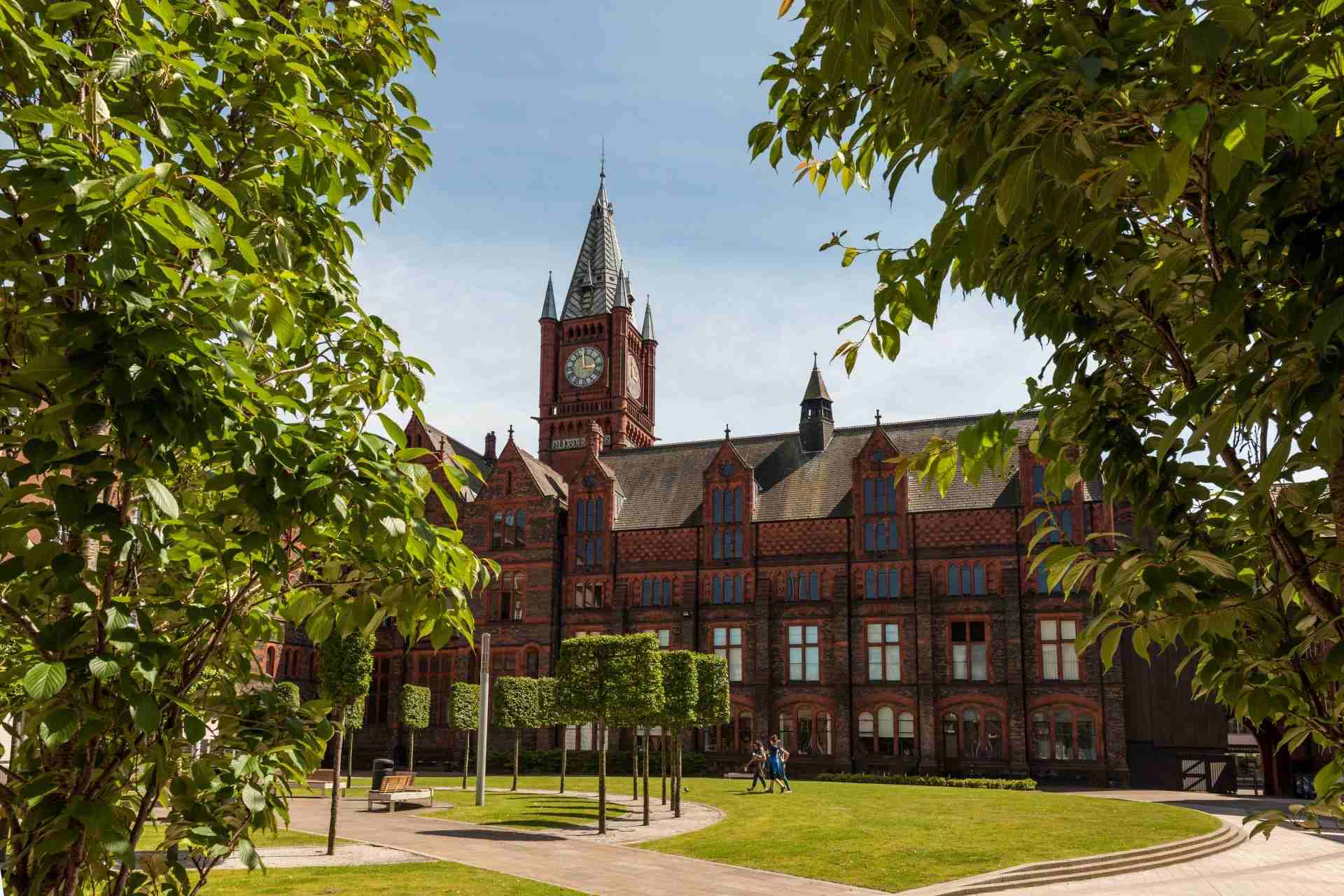
Victoria Gallery and Museum Reception |
| 09:30 – 10:45 |
Welcome from the organising committee
Session 1: |
|
| |
Bruce Routledge |
Silver Bullets, Real Bullets and Slow Coaches – How can UNSDG 8.9 be realised in Jordan?
Considerable effort is being expended on archaeological site development in The Hashemite Kingdom of Jordan for the purposes of sustainable economic development, often targeting deprived rural communities adjacent to archaeological sites. While ostensibly addressing UNSD 8.9 (Promote beneficial and sustainable tourism) this stie development work faces two significant challenges. First, tourism in Jordan is primarily focused on foreign tourism realised via high volume coach tours directed towards internationally famous sites such as Petra, Jerash, and Mt. Nebo. This leads to limited engagement by tourists with the remainder of the country, concentrating rather than distributing wealth and endangering Jordan’s most high value sites through overuse. Second, foreign tourism to Jordan is highly volatile and directly tied to perceptions of security in the region. For example, between 2023 and 2024 foreign tourism to Jordan declined by 71% as a result of the war in Gaza. Internal Jordanian tourists usually constitute less than 25% of site visitors, but their numbers are much more stable with distinct preferences in terms of which sites are visited. Using my experience directing a site development and community engagement project at Tell Dhiban in Jordan, in this paper I offer ‘Slow Tourism’ as an alternative model for achieving beneficial and sustainable tourism development in Jordan, stressing the enhancement of the social and culture, as well as the economic, value of archaeological sites for Jordanians.
|
| |
Erin O’Halloran |
Reframing Picasso’s Guernica.
This paper draws on my postdoctoral fellowship, ‘Gernika as Orient’, which used the Basque town of Gernika—both the 1937 attack on the town in the midst of the Spanish Civil War, and the painting by Picasso which it inspired—as a way into broader conversations about the history of colonial violence, media disinformation campaigns, and the role of art as a form of political protest in the Middle East and North Africa.
I am a historian of the Middle East who was taken aback by a trip to the Museo Reina Sofia in Madrid in 2017, where I discovered that Picasso’s famous painting, Guernica, is presented as having been inspired by the “first” carpet bombing of an innocent civilian population, in this case the Basque residents of Gernika, in 1937. This shocked me because, as a historian of the early twentieth century in the Levant, I am familiar with the much earlier aerial bombardments carried out by European air forces against the cities and towns of Iraq, Afghanistan, Syria, Morocco — and the list goes on. Roughly twenty years of aerial attacks on non-Western civilians were seemingly erased by this museum plaque in favour of more familiar, European victims; I was amazed to discover that the same erasure was repeated in the British Art History A Level curriculum, which features Guernica prominently on its syllabus. My research is an attempt to set the record straight on both the attack on Gernika and the famous painting it inspired, by situating them within a much longer historical trajectory—one that encompasses both Europe and the Middle East/North Africa, and places their respective histories of violence, art, and political communication within a mutually informed and mutually enriching dialogue.
|
| |
Beatriz Marin- Aguilera |
Education & Heritage for and with Indigenous Peoples.
Archaeology is one of the most powerful tools to fight racism and to enact political change, thus empowering Indigenous and Afro-descendant communities today. My research in the Caribbean with Indigenous communities builds precisely on this political agenda and gave birth a year ago to the project ‘Anticolonial Caribbean Futures’. This project, in collaboration with Kalinago communities from the Commonwealth of Dominica, British museums, and LUMA Creations brings to the forefront the agency of Indigenous Kalinago communities in taking their own place in history. Indigenous communities across the Caribbean have been historically exploited when not brutally enslaved and/or killed since colonial times. Almost half of the Kalinago population in Dominica live in poverty today. Education in the country, and across the Caribbean, still portrays the Kalinago communities as backward, upkeeping colonial stereotypes of ‘cannibalism and warlike Caribs’ (former-colonial designation of the Kalinagos) that are not supported by archaeological data. These pervasive narratives are still taught in schools across the Caribbean and thus Kalinagos continue to be systematically discriminated, with only a few accessing higher education and the majority emigrating because of the lack of jobs within their territory and beyond. Our project aims at changing the national curriculum and the museums’ narratives on both sides of the Atlantic by co-creating teaching materials and museum displays. This will enhance social cohesion and knowledge development and provide young Kalinagos with a sense of identity and belonging. Additionally, our goal is to train interested Kalinagos in ecotourism and heritage protection and management, empowering them to create economic growth and design their own successful future as one of the few surviving First Nations of the Caribbean.
|
| |
Farah Benbouab dellah |
Lessons of Dominion: Human–Animal Relations, Tigers, and the Costs of Control.
This paper examines how historical narratives of dominion over nature, particularly through the figure of the tiger in Asia, shaped human–animal relations and ecological practices. From imperial hunts to colonial representations of conquest, the tiger symbolised both threat and triumph, reinforcing cultural assumptions of human mastery over the wild. These practices contributed not only to the decline of tiger populations but also to the wider degradation of ecosystems, showing how symbolic dominion translated into unsustainable exploitation.
By analysing these past narratives, the paper highlights the consequences of framing nature as an adversary to be subdued rather than a partner in coexistence. The lesson from this history is that dominion-based models of conservation or resource use perpetuate ecological harm.
|
| 10:45 –11:15 |
Comfort break |
|
| 11:15 – 12:30 |
Session 2: |
|
| |
Abigail Edson |
Understanding the importance of midwives: the evolution of birth assistance and what we can learn from it.
Women’s health issues have been chronically ignored by the medical profession, a problem now exacerbated by a floundering healthcare system, yet understanding the needs of mothers is vital in securing long-term public health. The Palaeolithic has been a key target of feminist archaeology since its inception, and may now be brought to bear upon current obstetric concerns, particularly the disparity in positive birth experiences across the UK. An understanding of birth assistance, its origins, evolution, and implications for health and wellbeing, is vital to contextualise the current needs of labouring mothers. This presentation will examine the archaeological and anatomical evidence for birth assistance in the hominin lineage, as well as primatological observations, to discuss the earliest emergence of this behaviour and its impacts on human evolution. It is apparent that the emotional component of birth assistance was as vital as physical or medical intervention, yet is often overlooked in a crowded healthcare system. Indeed, emotional support may have predated other forms of birth assistance, giving primacy to emotional wellbeing in the evolution of human birth. Drawing upon this evolutionary perspective, this presentation will discuss the shortfalls in the current UK system: where the needs of mothers are often left unmet. This presentation joins the calls for a more sensitive and holistic approach to birth, in both the UK and further afield, culminating in recommendations to increase the uptake and retention of skilled medical professionals, who, as archaeology highlights, are some of the most impactful figures in human development.
|
| |
Francesca Fulimante |
Women and Urbanization: How Breastfeeding Practices Affect Community Growth and Wellbeing and How Urbanization Affects Women’s Lives.
In this paper we propose to test the link between breastfeeding duration, average age at death and economic prosperity in past populations. We use life-expectancy as an indicator of well-being and therefore of economic prosperity in the past population. By using Early Iron Age Italy and Germany as case studies we test this novel approach.
Applying the R-package mortAAR, we use life-expectancy at different age-levels as an indicator of economic growth and we test it by applying settlement scaling theory. This theory correlates settlement (or in our case burial community) size with economic outputs (e.g. GDP per capita and/or morbidity in our case) and expectancy of life at birth and breastfeeding duration with average age at death. While the theory predicts that GDP per capita should scale supra-linearly with increased degree of urbanization it is more difficult to predict the relationship to mortality rates and breastfeeding.
Before modern medicine there is some evidence that death rates were higher in larger cities, but also some evidence that people that survived contagious diseases in childhood, may have gained some immunity. In contemporary cities, larger cities have typically younger populations, because they attract professional age people, and often people retire away from them. In ancient cities we might expect an analogous situation, but it is hard to know the magnitude of these migration flows.
To conclude this paper will test and discuss issues and/or advantages of a new approach to identify the link between breastfeeding, sustainable development, on one hand, and growth and health, on the other, hopefully to provide a new tool for wider comparative perspectives in urbanization and/or demographic studies.
|
| |
Annabel Lynsey Shale |
Women Are Not Just “Strange Men”: Studying Women’s Pain in Ancient Egypt to Inform Approaches to the Gender Pain Gap.
The ancient Egyptians left behind a large amount of materia medica – or healing papyri – related specifically to the care of women and their ailments. Documented within these texts are a variety of medical complaints and prescriptions dealing with issues of conception, contraception and other issues of women’s health. In many of the cases which are centred on the observable symptoms in women, a variety of of descriptors of female pain can be observed, reflecting modern descriptions of pain reported by women to their medical practitioners when seeking help and treatment.
These descriptors demonstrate a grounding in the recognition and healing of women’s pain in ancient Egypt, with pain located both inside the gynaecological organs and in other disparate parts of the body. Pain can be classed as “scratching”, “suffering”, “aching”, “hot” or simply as “pain”, leaving the exact feeling open to interpretation by the medical practitioner and echoing terms used in women’s modern descriptions of pain. The variety of these descriptors used when discussing pain can often result in women being dismissed if their experiences do not fit into a particular tick box on what symptoms are “expected” of different conditions.
Over the course of the development of modern Western medicine, there has been less recognition of the reality of women’s pain, particularly with the perpetuation and re-popularisation in the 20th century of the reductionist idea that women are simply “hysterical”. The variety of women’s experiences of pain also lead medical professionals, workplaces and education establishments to believe that women and girls are lying about, over-exaggerating or inventing their pain. Understanding approaches to women’s pain in ancient Egypt aids in the decolonisation of women’s health medicine and re-contextualises harmful stereotypes which inform the attitudes to women’s pain in modern health, employment and education practices.
|
| |
Giorgos Papantoniou |
Cultural Heritage and Memorial Healing in The Xeros River Valley, Larnaka, Cyprus: The Role of Archaeology.
The Xeros River valley, where the ‘Settled and Sacred Landscapes of Cyprus’ project (SeSaLaC) conducts archaeological research since 2014, reflects timeless and current phenomena related to political, cultural and human traumas: conflict between Greek- and Turkish-Cypriots, displacement, immigration and human suffering, creation of national and religious identities, destruction of sacred sites and secular buildings, and abandonment. Firstly, by focusing on two sites of sacred character, one related to the Greek-Cypriot Orthodox community (i.e. a Byzantine Church dedicated to Mary) and the other to the Turkish-Cypriot Muslim community (i.e. a 20th century cemetery) in the valley, this paper demonstrates how cultural heritage studies can contribute to healing this sense of abandonment and negative collective memory. In addition, via the employment of Archaeology-Based Wellbeing Interventions (AWIs), as well as including both local communities and vulnerable groups (i.e. families and carers related to Huntington’s Disease), we explore how engagement with the past can make a difference to wellbeing, producing outcomes such as socialisation, happiness and self-esteem. Our activities include a variety of programmes based on archaeology, including open days, archaeological practice, walks in the historic landscape, photographic sessions, film-making, other craft workshops and digital tools. Thus, this contribution results in a tangible recommendation to governmental bodies, communities, health-centers and archaeological groups to adopt tools that contribute to mental health and promote inclusiveness, equality, connection and cohesion
|
| 12:30 – 13:30 |
Lunch |
Lunch will be provided at the cafeteria space within the Victoria Gallery and Museum
|
| 13:30 – 14:45 |
Session 3: |
|
| |
Andrew Kandel |
Human Migration ‒ A Multi-temporal Synthetic View Addressing Challenges for Policymakers from an Archaeological Perspective.
This contribution presents a deep understanding of human migration by offering a multi-temporal and multi-scalar archaeological perspective. While rapidly increasing mass human migration is a contemporary issue, archaeological studies demonstrate that global migration has been an observable feature of humanity since modern humans first evolved hundreds of thousands of years ago. Drawing together archaeological and historical research, from movement of early modern humans in the Levant to migration into Europe in the very recent past, this project affirms: inferences from archaeologically derived examples of human migration from different physical, socio-cultural, and politico-legal contexts can inform the development of more humane and sustainable international migration policy.
The core group first met at a workshop in September 2019, where we hypothesized that healthy and sustainable human society can be better achieved when its members are afforded equal access to basic human securities, and that environmental justice and social justice are two sides of the same coin. Drawing on the United Nations framework for seven Human Securities (economic, health, personal, political, food, environmental, community), we harmonized our vastly different methodologies and datasets about human migration to draw comparisons and identify commonalities. Our research addresses what ‘successful’ human migration might look like: For whom was it successful? Is it possible to establish measurable variables which must be met for human migration to occur (relatively) peacefully? What can an archaeological perspective offer to contemporary global debates on human migration? |
| |
Adam Green |
The Archaeology of Reducing Inequalities.
Rising economic inequality reduces prosperity, erodes
public institutions and creates social deprivation, but researchers and policymakers are deeply divided on why it continues to rise, and what can be done to lower it. One problem is that most research on reducing inequalities is based on a narrow band of very recent human societies—most often those in which inequality is marching steadily upward. The global archaeological record, by contrast, can provide evidence from a wide range of societies that reduced inequalities in the past, yielding lessons about how it can be reduced today. We use a variety of quantitative and qualitative approaches to argue that the global archaeological record reveals that rising economic inequality is not an inevitability. Analysis of a global sample of private residence areas from past societies reveals that though the ceiling of economic inequality has risen over time, many societies adopted forms of governance that prevented it from rising. Rising inequality, moreover, has sometimes forestalled rising productivity, generating long-term cycles that can destabilise large-scale socio-economic systems in the past, such as in the Bronze Age Eurasia or Roman Britain. On a more hopeful note, evidence from ancient urban societies across the globe reveal that preventing the concentration of wealth can sustain economic prosperity. These examples suggest that if governments want to sustain prosperity and provide their citizens with high standards of living, they must reduce the concentration of private wealth. In other words, the global archaeological record supports transdisciplinary arguments that a global wealth tax could reduce inequalities and help today’s economies achieve and sustain income growth of the bottom 40 per cent of the population (SDG 10.1) and adopt policies, especially fiscal, wage and social protection policies, that progressively achieve greater equality (SDG 10.4).
|
| |
Lydia Barrett |
‘An Old Enemy’: Facing up to Corruption.
The UN recognises corruption as a critical threat to every SDG. Despite this, they isolate corruption to SDG-16 and report little progress in tackling or even defining corruption. By drawing upon a range of ancient evidence, this talk explores how the ancient world’s understanding of corruption can enlighten our own.
We begin by attempting to define corruption. The ancient sources present corruption as a fluid, ever-changing concept, thus difficult to identify. E.g. what one culture calls bribery, another calls gift-giving (Hdt.6.132-6). Acts previously judged acceptable can later be judged corrupt (Thuc.6.60, Dem.19.273-5). Corruption may be overlooked if the end result was positive (Thuc.2.21, Diod.13.106), or it becomes an embedded practice (P.Fay.117, P.Oxy.73.4953, SB 6.9207). Understanding and tackling corruption today must recognise its malleability.
The talk then discusses how the ancient world primarily understood corruption: as a moral issue. Corruption grew from an inner moral failing (Aeschin.3.81, Din.1.3), which anyone could suffer (Dem.20.136). Greed and self-interest drove this failure; creating desire for gain (Thuc.3.82, Eur.Supp.236-243) that motivated further corrupt acts out of desire for wealth (Andoc.4.32) and power (Ar.Eq.435-436). The modern understanding of corruption downplays morality; the ancient evidence teaches we must accept their deep connection.
In linking corruption and morality, ancient sources drew a line that was used to identify corruption: self-interest vs public gain. Self-interest conflicted with loyalty and justice (Thuc.2.60, SEG 8.527) as did corruption (Din.2.7, Dem.19.268). Individuals were condemned as corrupt when their actions harmed the community (Pl.Rep.390d, Hyp.5.27). Anticorruption laws relied upon this distinction (Dem.21.113), yet some corruption by public officials was ‘tolerated’ (Xen.[Ath.Pol].2.20, Hyp.5.25). This distinction can refine our perception of corruption – if we confront our own complacency.
|
| |
Bruce Gibson |
Civic Water Management in the Ancient World: Problems and Mitigations.
This paper addresses UN SDG 6 ‘Ensure availability and sustainable management of water and sanitation for all’ (and also has relevance to SDG 11 ‘Make cities and human settlements inclusive, safe, resilient and sustainable’) by looking through the lens of ancient water management in the Roman empire. While Rome’s aqueducts have been acclaimed as extraordinary feats of civic engineering, both in antiquity in authors such as Pliny the Elder and Frontinus and in later periods, the ancient world offers also insights into some of the more problematic aspects of water management, including the private exploitation of water for individual gain as described by the Roman author Frontinus (On aqueducts 7). In a context where in many countries proper access to water is not something that is available to all, it is instructive to consider attitudes in antiquity towards water supply to large urban conurbations such as Rome and Constantinople.
For policy to be effective, it must appear to be persuasive, and this paper will examine why rulers might have chosen to intervene to support the water needs of major cities. The paper seeks to explore the tensions between the needs of the community and the possibility for individuals to exploit water as a resource for private gain, and shows that on occasion it was necessary for rulers to intervene on behalf of their citizens and to take measures against the private exploitation of water.
|
| 14:45 – 15:15 |
Refreshment break |
|
| 15:15 – 16:30 |
Session 4: |
|
| |
Paul Lane |
Pastoralist Cultural Heritage, Water Security and Wellbeing in Northern Kenya and Southern Ethiopia: Policy Recommendations.
This paper draws on the results of an ongoing, collaborative community archaeology project initiated in 2018 and involving community representatives from three pastoralist societies (Boran, Gabra and Rendille) currently occupying arid and semi-arid areas of northern Kenya and southern Ethiopia. The project is specifically geared toward knowledge co-creation with pastoralist groups and other heritage stakeholders, skills transfer, secondary and primary education on local cultural heritage, and the development of policy guidance for state actors, local government departments and NGOs on the importance of integrating care and protection of tangible and intangible cultural heritage into sustainable development planning and initiatives. With its initial focus on the archaeology and history of traditional hand-dug wells and their management, the SDG of most direct relevance to the project’s activities and policy outputs is SDG6 Ensure availability & sustainable management of water and sanitation for all, especially Target 6.b Support & strengthen the participation of local communities in improving water and sanitation management. However, the project has also generated insights for several other SDG targets, including Target 8.9 Promote beneficial and sustainable tourism; Target 11.4 Protect the world’s cultural and natural heritage and Target 15.9 Integrate ecosystem and biodiversity values into national & local planning, development processes, poverty reduction strategies and accounts. In this paper we will outline the key priorities identified by community groups and other stakeholders in the various group and individual meetings we have held, and our recommendations on the necessary policy changes needed.
|
| |
Daryl Stump |
The Concept of Land Degradation Neutrality Should Recognise Decadal- to Centennial-scale Transitions: Archaeological Evidence from the Irrigated and Terraced Landscapes at Engaruka, Tanzania, and Konso, Ethiopia.
The concept of land degradation neutrality (LDN) is explicitly referenced in SDG 15.3, and is defined by the United Nations Convention to Combat Desertification (UNCCD) as “a state whereby the amount and quality of land resources necessary to support ecosystem functions and services to enhance food security remain stable, or increase, within specified temporal and spatial scales and ecosystems.” This recognition of the need to define spatial and temporal scales is crucial, with the UNCCD’s 19 principles for LDN implementation noting the possibility of counterbalancing losses and gains over a given timeframe. Understandably given the urgency and pace of land degradation, both SDG 15.3 and the UNCCD’s principle of LDN implementation are focussed on the coming decades measured against recent baselines, but archaeological evidence can demonstrate processes of degradation and regeneration playing out at centennial scales. Using the examples of Engaruka in Tanzania and Konso in Ethiopia, this paper will outline archaeological evidence for how both of these farming communities employed widespread and severe soil erosion to capture fine-grained sediments in irrigable locations, allowing them to employ irrigation without soil salinization for several centuries; contrasting this achievement with a government- and NGO-sponsored irrigation project adjacent to the Konso highlands that is experiencing detrimental salinization after just a decade of cultivation. Archaeological evidence was not only crucial to recognise and define this process of land management, but can also help predict the future impacts of irrigation projects, and can employ the UNCCD’s indicators of LDN to quantify losses and gains at centennial timeframes. Doing so qualifies the use of simple time-slice metrics of LDN, and highlights the need to work with local communities to understand the potential centennial-scale gains facilitated by decadal-scale impacts.
|
| |
Tanja Romankiewicz |
Turf Worlds – Building the Future from the Past: The Positive Climate Action Potential of Building with Turf in Circular Economies and Ecologies.
The Grassroots Hutting project is a co-produced initiative by Tanja Romankiewicz (University of Edinburgh), Archaeo Build’s traditional builders and archaeologists, permaculture and eco-tourism venue Comrie Croft, and public heritage agency Historic Environment Scotland. Together, we have designed two turf-walled structures in Perthshire, Scotland: a bench as landscape art and a full-scale hut. We built these with local volunteers and professional practitioners, supported by ecologists, agricultural scientists, and social science researchers:
Blog: https://blog.engineshed.scot/2024/01/24/grassroots-hutting-an-architecture-borrowed-from-the-soil/
Film: https://www.youtube.com/watch?v=TsYTGZm6GlU
We aimed at promoting the intangible heritage of turf building, known in Scotland from the Neolithic, to embed this practice into positive climate action. By training local communities and professional practitioners through immersive experiences, we not only built structures, but also resilience and new capacities. We hope to have empowered them to become positive multipliers of turf building and turf buildings. The project was not designed to replicate prehistoric buildings, but to construct modern structures inspired by ancient concepts of circular economies that demonstrate the viability of local, natural, zero-carbon, circular architecture.
Our conference contribution would add turf as a raw earthen material -technically a “mudbrick made by nature”- to Scotland’s policies on the use of renewables in the built environment drawing on traditional uses of materials. Based on Romankiewicz’s research into prehistoric circular architectures and economies, the talk will discuss the chances and challenges of building with this ancient material in a modern world. Its focus will draw on building in an agricultural context, for structures which often do not need planning permission but contribute to farmers’ carbon footprint emissions, regulated by government policy.
|
| |
Andrew Fox |
Ancient Wine in the Circular Economy.
Romans poured wine on plane trees, which was understood to encourage their growth (Pliny, Natural History 12.8). This paper explores the ethos of the ancient circular economy in forms that are archaeologically fugitive, and its shared ethical framework with the modern circular economy. Furter, it introduces a methodology for how we can test the viability of spoiled wine, which is high in nitrogen, as an organic fertiliser. If the results prove viable, this fertiliser would interrupt end-of-waste cycles, meeting the United Nations’ Sustainable Development Goals 2, 9 and 12, and would introduce an organic, low-carbon, vegan fertiliser to the industry.
|
| 17:00 –18:00 |
Keynote |
|
| |
Professor Robert Kelly |
Learning from the Past how to Build the Future.
Humanity’s global past, which encompasses many millennia, environments, and adaptations, is the only laboratory we have for understanding human behavior as it is manifested over long spans of time and great reaches of geography. Since 1905, when George Santayana wrote “Those who cannot remember the past are condemned to repeat it,” we have taken the past as only a vague warning: don’t do that again! But can the past offer us something more, not a prediction but a prescription for the future? In this talk I’ll briefly review the argument of my 2016 book, The Fifth Beginning, and consider the processes at work today that are driving change, and what we might do to direct that change to create the life we all seek: one of global peace and prosperity.
|
| 18:00 – 19:00 |
Refreshments (in Central Teaching Labs) |
|
| |
|
|